
/// Passive fire protection in Kensington and Chelsea
The Royal Borough is known for stucco terraces divided into flats, red-brick mansion blocks, mews houses and hotels around Earl's Court and South Kensington, plus estates and newer blocks in North Kensington and around World's End.
Many buildings are listed or in conservation areas, so fire safety work has to respect the building as well as protect the people in it. We'll always explain the options before anything is changed.
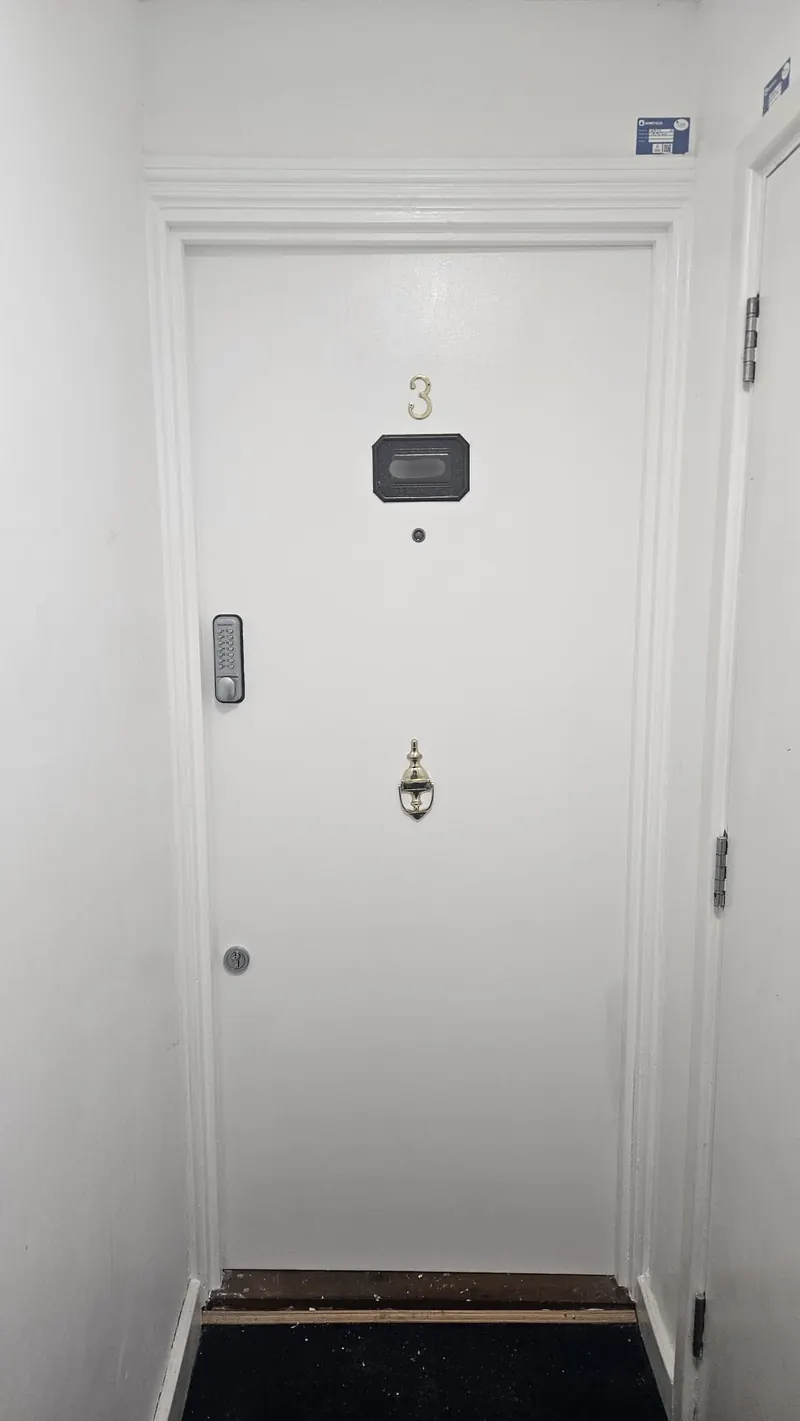
Fire doors in Kensington and Chelsea
Flat entrance doors in period buildings are often original or high-spec doors that owners want to keep. We inspect them honestly, explain whether repair or a tested upgrade is realistic, and install certified fire doors finished to suit the building where replacement is needed.
Fire stopping and compartmentation in Kensington and Chelsea
Lift shafts, risers and old service routes in mansion blocks often have openings that have been there for decades. We survey and fire stop the penetrations, and compartment meter cupboards in shared halls, keeping the finish neat.
What we check in Kensington and Chelsea buildings
- Period flat entrance doors: fire rating, gaps and closers
- Mansion block communal doors and stair enclosures
- Risers and service routes between floors
- Meter cupboards in shared entrance halls
- Hotel corridor and bedroom doors
Rules that apply to Kensington and Chelsea buildings
Regulatory Reform (Fire Safety) Order 2005
Requires a fire risk assessment for the common parts of blocks of flats and all non-domestic buildings, including flat entrance doors since the Fire Safety Act 2021.
Fire Safety (England) Regulations 2022
Over 11 metres: communal fire doors checked every three months, flat entrance doors yearly (best endeavours).
BS 8214:2016
The code of practice for specifying, installing and maintaining timber fire door assemblies.
Nearby areas we cover: Westminster Lambeth Camden