
/// Passive fire protection in Barnet
Barnet has suburban houses converted into flats, purpose-built blocks from the 1930s onwards, care and supported-living buildings, and large new developments around Colindale and Mill Hill.
In smaller blocks the rules are often misunderstood. Even where the quarterly door checks don't apply, the responsible person still needs a fire risk assessment, and the fire doors and fire stopping still have to work.
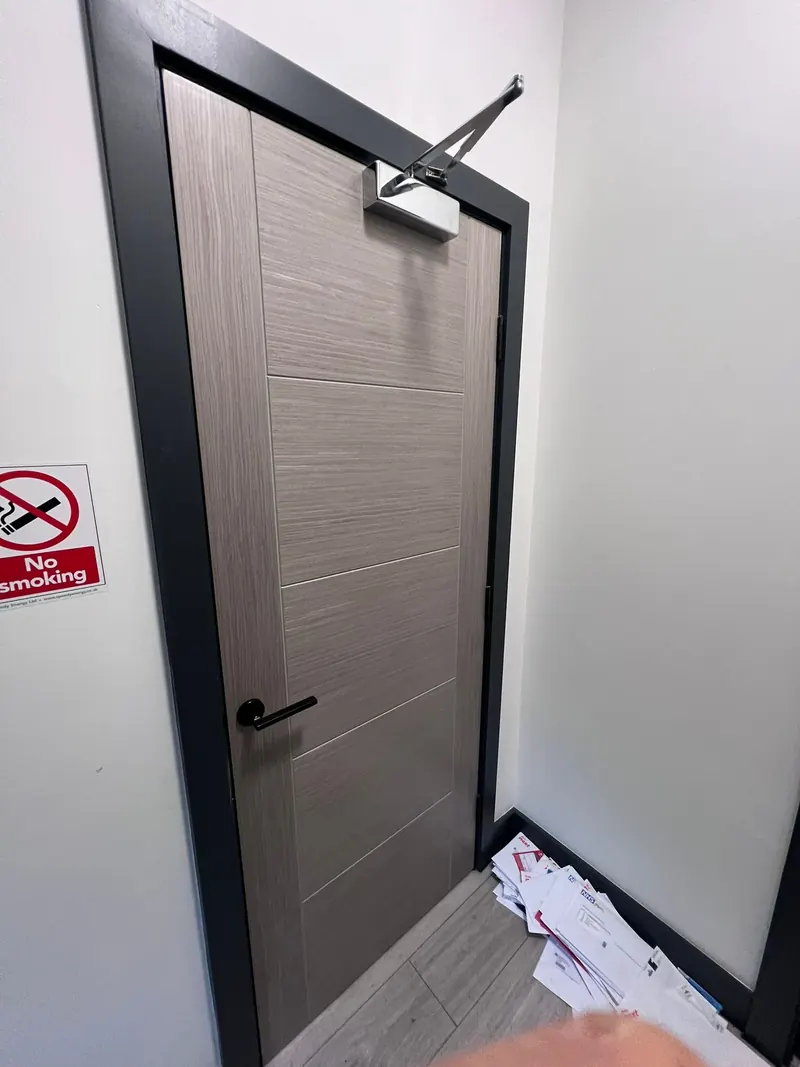
Fire doors in Barnet
We inspect fire doors in blocks of any size, repair and adjust closers, hinges and seals, and install new fire doors on flat entrances, communal areas, stores and plant rooms.
Fire stopping and compartmentation in Barnet
In new developments we look for penetrations left unsealed at handover, and in older blocks for services added over the years. We fire stop pipes, cables and ducts through fire-rated walls and floors, and compartment meter cupboards.
What we check in Barnet buildings
- Flat entrance and communal doors in low- and mid-rise blocks
- Closers set too weak to latch the door
- Bin store, plant room and cupboard doors
- Penetrations left open in new-build risers
- Meter cupboards in converted houses
Rules that apply to Barnet buildings
Regulatory Reform (Fire Safety) Order 2005
Requires a fire risk assessment for the common parts of blocks of flats and all non-domestic buildings, including flat entrance doors since the Fire Safety Act 2021.
Fire Safety (England) Regulations 2022
Over 11 metres: communal fire doors checked every three months, flat entrance doors yearly (best endeavours).
BS 8214:2016
The code of practice for specifying, installing and maintaining timber fire door assemblies.