
/// Passive fire protection in City of London
The City of London is mostly offices, with residential estates such as the Barbican and Golden Lane, hotels, and a growing number of mixed-use buildings. Our office on City Road is just north of the Square Mile.
Offices change constantly. Each fit-out moves partitions, cabling, data and air conditioning, and each change risks a hole in a compartment wall or floor that nobody seals. That is why fire stopping is the most common fire safety issue we look for in the City.
Fire doors in City of London
Office cores, stair lobbies and plant rooms rely on fire doors that get heavy use every day. Closers wear, seals get damaged by trolleys and doors get propped open. We inspect, repair and replace fire doors so they close, latch and seal as they should.
Fire stopping and compartmentation in City of London
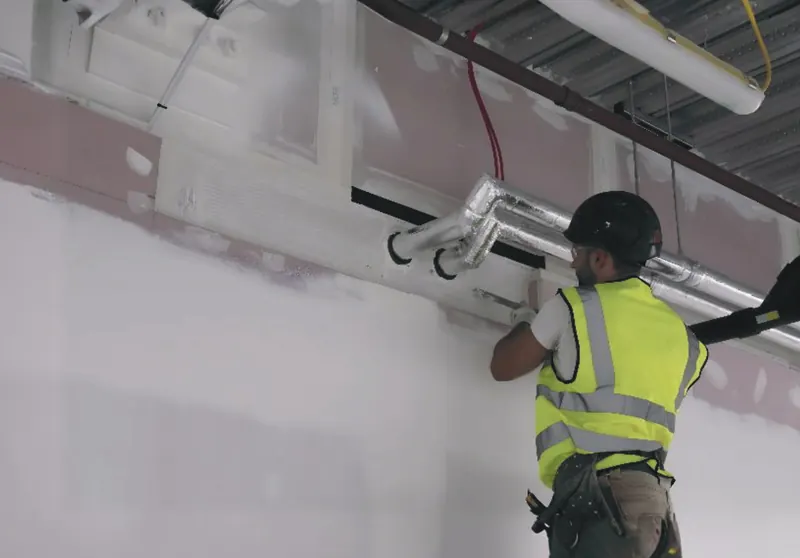
After a fit-out, we survey the ceiling voids, floor voids and risers for open penetrations, then fire stop them with products tested for that service and construction, including cable bundles, data trays, pipework and ductwork. We also compartment riser and meter cupboards and fit fire-rated access panels.
What we check in City of London buildings
- Ceiling and floor voids after an office fit-out
- Risers carrying data, power and pipework between floors
- Stair core and lobby doors: closers, latching and seals
- Plant room and riser doors
- Fire-rated access panels in compartment walls
Rules that apply to City of London buildings
Regulatory Reform (Fire Safety) Order 2005
Requires a fire risk assessment for the common parts of blocks of flats and all non-domestic buildings, including flat entrance doors since the Fire Safety Act 2021.
Approved Document B
Requirement B3: compartment walls and floors, with every service opening through them fire-stopped.
Tested fire stopping (BS EN 1366-3)
Penetration seals must be tested for the actual service, construction and opening size.
Nearby areas we cover: Islington Tower Hamlets Southwark