
/// Passive fire protection in Havering
Havering is London's most easterly borough, and it feels more like a set of suburban towns than inner London. Romford town centre now has a cluster of tall new apartment buildings near the station, while Harold Hill is a large post-war estate and Hornchurch, Upminster and Gidea Park are mostly inter-war houses with some purpose-built flats and conversions.
Tall new blocks bring the stricter rules for higher-risk buildings; older blocks need practical repairs. We cover all of Havering, and Romford is an easy run from our City Road office on the Elizabeth line or the A12.
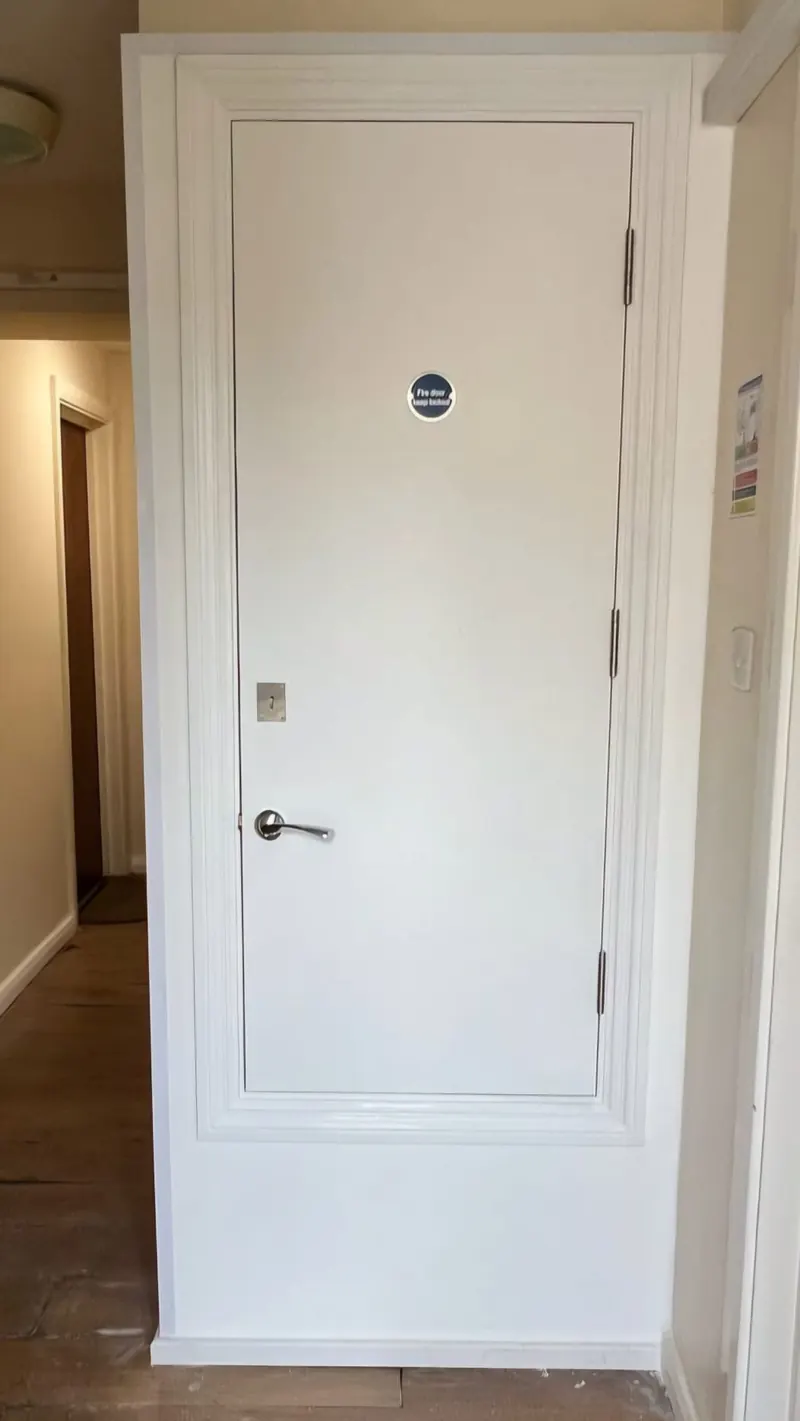
Fire doors in Havering
In Romford's newer towers, accountable persons need an organised record of door checks: communal doors every three months and flat entrance doors every year where the building is over 11 metres. On Harold Hill and in older blocks, the work is more hands-on: replacing missing closers, refitting seals and dealing with doors residents have changed. We provide fire door inspections with clear records, repairs and new doorsets.
Fire stopping and compartmentation in Havering
Tall buildings depend on compartmentation so that a fire stays in the flat where it starts. Risers, service cupboards and ceiling voids on every floor must be sealed where services pass through. We survey floor by floor, seal with tested fire stopping, photograph each seal for your records and complete meter cupboard compartmentation.
What we check in Havering buildings
- Door check records for taller blocks near Romford station
- Communal and flat entrance doors on post-war estates
- Riser and service cupboard penetrations floor by floor
- Doors replaced by residents with non-fire-rated ones
- Bin store, car park and plant room doors
Rules that apply to Havering buildings
Fire Safety (England) Regulations 2022
Over 11 metres: communal fire doors checked every three months, flat entrance doors yearly (best endeavours).
Building Safety Act 2022
Residential buildings of 18 metres or seven storeys with two or more flats are higher-risk buildings, with duties to manage fire spread.
Regulatory Reform (Fire Safety) Order 2005
Requires a fire risk assessment for the common parts of blocks of flats and all non-domestic buildings, including flat entrance doors since the Fire Safety Act 2021.