
/// Passive fire protection in Dartford
Dartford is one of the fastest-growing places in Kent. New apartment blocks have gone up in the town centre and along the river at Greenhithe, and Ebbsfleet Garden City is adding thousands of homes across Dartford and Gravesham. There are also older Victorian streets, post-war estates and large commercial buildings around Bluewater and the Dartford Crossing.
With so much new building, much of our work here is checking that what was installed matches what was designed. We cover the whole of Dartford borough, a short trip from London over the A2.
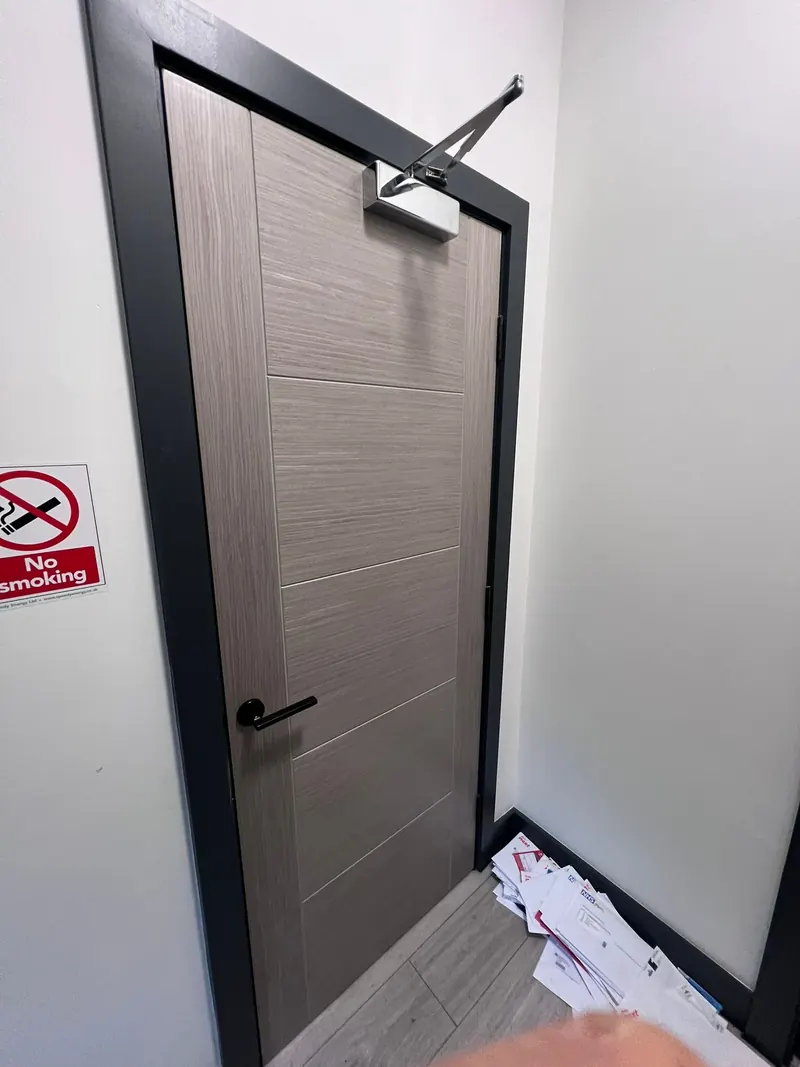
Fire doors in Dartford
New developments are handed over with fire door sets, but defects are common: frames not fixed or packed correctly, gaps outside tolerance, ironmongery that isn't part of the certification and doors trimmed on site. We inspect doors against their certification, rectify defects and install doorsets correctly, with the paperwork to show it.
Fire stopping and compartmentation in Dartford
In new blocks the fire stopping is usually hidden behind boarding by the time the building is occupied, and late changes during construction can leave gaps. We open up and check risers, ceiling voids and service cupboards, seal anything missing or wrong with tested fire stopping, and complete meter cupboard compartmentation.
What we check in Dartford buildings
- Fire door sets in new blocks: frame fixing, gaps and certification labels
- Ironmongery changed or added after installation
- Risers and service cupboards behind boarding
- Penetrations through compartment floors in new apartment blocks
- Doors to stairs, car parks and plant rooms
Rules that apply to Dartford buildings
Regulatory Reform (Fire Safety) Order 2005
Requires a fire risk assessment for the common parts of blocks of flats and all non-domestic buildings, including flat entrance doors since the Fire Safety Act 2021.
Fire Safety (England) Regulations 2022
Over 11 metres: communal fire doors checked every three months, flat entrance doors yearly (best endeavours).
Building Safety Act 2022
Residential buildings of 18 metres or seven storeys with two or more flats are higher-risk buildings, with duties to manage fire spread.